Hello ladies and gents this is the Viking telling you that today we are talking about
BREAD
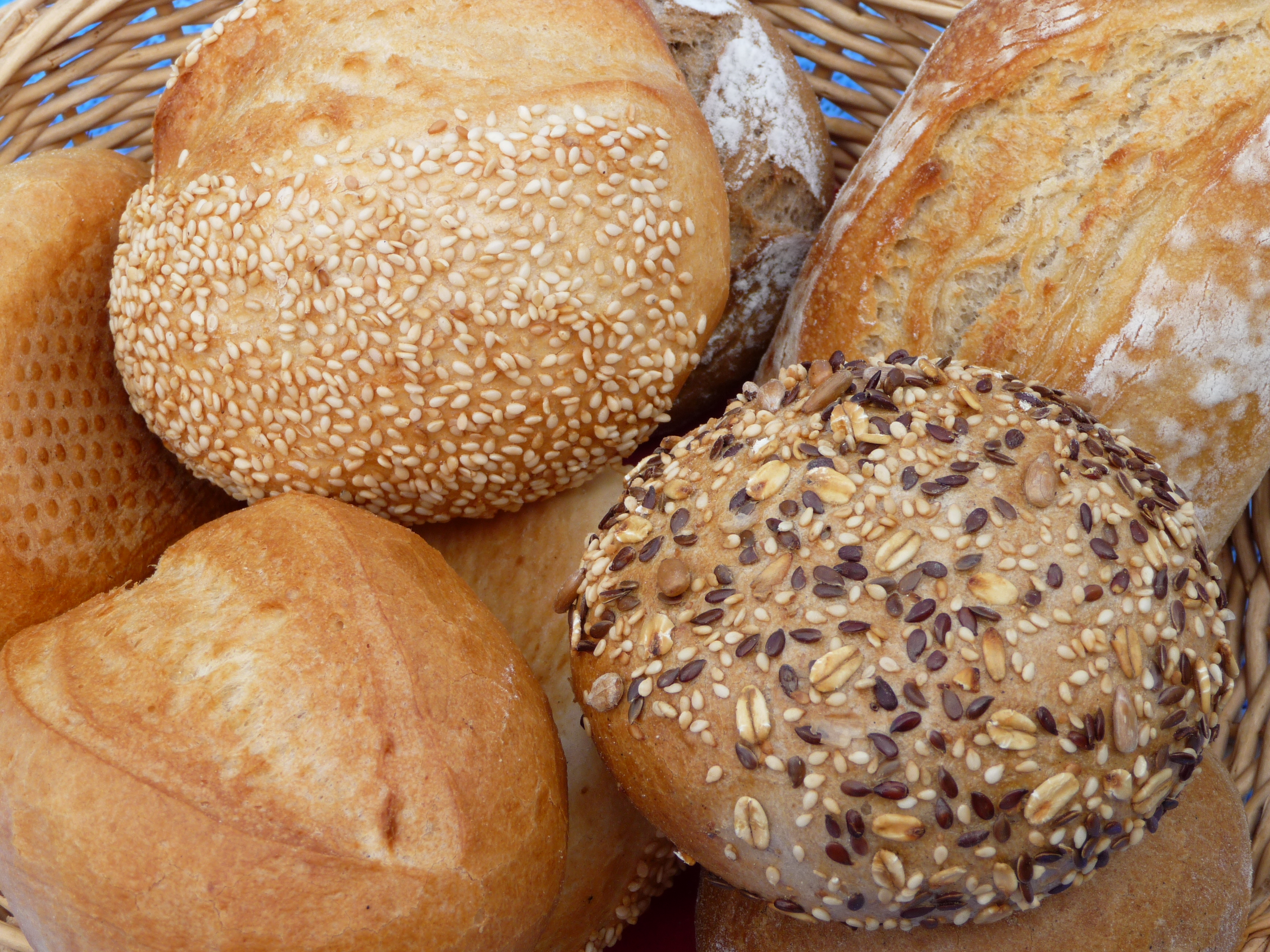
Bread was central to the formation of early human societies. From the Fertile Crescent, where wheat was domesticated, cultivation spread north and west, to Europe and North Africa, and east towards East Asia. This in turn led to the formation of towns, as opposed to the nomadic lifestyle, and gave rise to more and more sophisticated forms of societal organization. Similar developments occurred in the Americas with maize and in Asia with rice.
Charred crumbs of a flatbread made by Natufian hunter-gatherers from wild wheat, wild barley and plant roots between 14,600 and 11,600 years ago have been found at the archaeological site of Shubayqa 1 in the Black Desert in Jordan, predating the earliest known making of bread from cultivated wheat by thousands of years. Grinding stones dated at 30,000 years old, possibly used for grinding grains and seeds into flour, have in recent years been unearthed in Australia and Europe, but there is no definitive evidence that these tools or their products were used for making breads.
Bread is otherwise strongly associated with agriculture. Wheat was domesticated in the Fertile Crescent. Bread is found in Neolithic sites in Turkey and Europe from around 9,100 years ago. Conical loaves of bread as grave goods exactly as laid out in the Great Tomb, North Necropolis, Gebelein, 5th Dynasty (Old Kingdom), 2435-2305 BC. Excavations by Ernesto Schiaparelli, 1911. Egyptian Museum, Turin, S. 14051-14055
There is extensive evidence of breadmaking in Ancient Egypt in the form of artistic depictions, remains of structures and items used in bread making, and remains of the dough and bread itself.
The most common source of leavening in antiquity was to retain a piece of dough (with sugar and water in) from the previous day to utilize as a form of sourdough starter. Pliny the Elder reported that the Gauls and Iberians used the foam skimmed from beer to produce "a lighter kind of bread than other peoples." Parts of the ancient world that drank wine instead of beer used a paste composed of grape must and flour that was allowed to begin fermenting, or wheat bran steeped in wine, as a source for yeast.
The idea of a free-standing oven that could be pre-heated, with a door for access, appears to have been Greek.
Even in antiquity there was a wide variety of breads. In ancient times the Greek bread was barley bread: Solon declared that wheaten bread might only be baked for feast days. By the 5th century BC bread could be purchased in Athens from a baker's shop, and in Rome, Greek bakers appeared in the 2nd century BC, as Hellenized Asia Minor was added to Roman dominion as the province of Asia; the foreign bakers of bread were permitted to form a collegium. In the Deipnosophistae, the author Athenaeus (c.A.D.170 – c. 230) describes some of the bread, cakes, and pastries available in the Classical world.
Among the breads mentioned are griddle cakes, honey-and-oil bread, mushroom-shaped loaves covered in poppy seeds, and the military specialty of rolls baked on a spit. The type and quality of flours used to produce bread could also vary, as noted by Diphilus when he declared "bread made of wheat, as compared with that made of barley, is more nourishing, more digestible, and in every way superior."
In order of merit, the bread made from refined flour comes first, after that bread from ordinary wheat, and then the unbolted, made of flour that has not been sifted." The essentiality of bread in the diet was reflected in the name for the rest of the meal: ópson, "condiment", i.e. bread's accompaniment, whatever it might be.
And as always have a chilled day from the Viking
Comments
Post a Comment